Creston, Cheshire or the North End? The History Behind One of Grand Rapids’ Most Debated Neighborhood Names
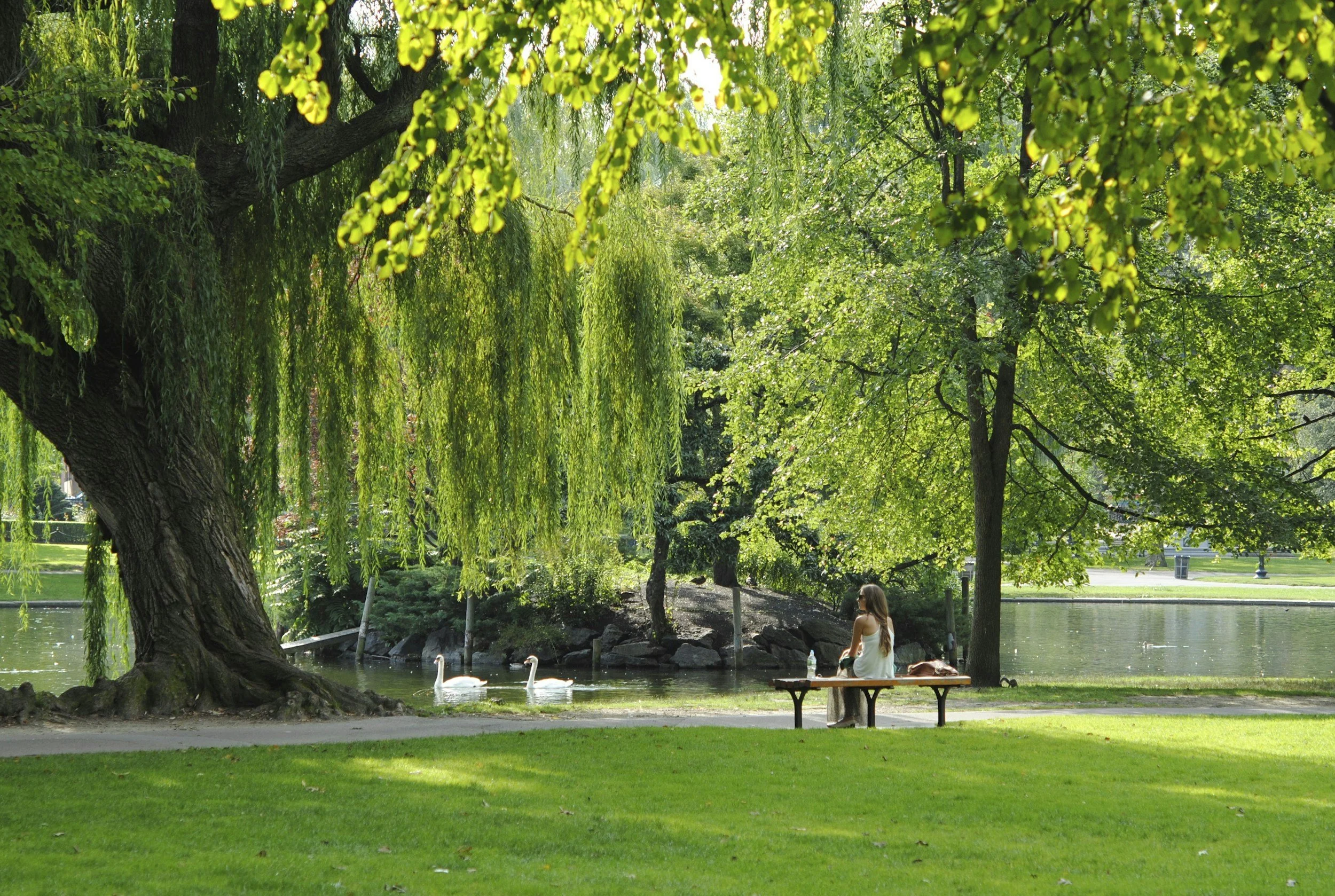
Drive north from downtown Grand Rapids along Plainfield Avenue and you may hear several names used to describe the community around you.
Some longtime residents simply call it Creston. Others identify more closely with Cheshire Village, particularly around the business district near Knapp Street. Many still refer to the broader area as the North End. Over the years, neighborhood organizations, business districts, city planning efforts, real estate listings and generations of residents have all influenced how this part of Grand Rapids is described.
The result is not necessarily a dispute with one correct answer. Instead, it is a story about geography, history, local identity and the way neighborhoods evolve.
Today, Creston is widely recognized as Grand Rapids’ largest neighborhood, stretching roughly from Leonard Street north to Four Mile Road and from the Grand River east toward Fuller Avenue and other portions of the city’s northeast side. Within those broad boundaries are several smaller communities, business districts and distinct residential areas—each with its own history and sense of place.
Understanding why people use different names requires looking back more than a century.
Before Creston: The Fifth Ward and the North End
Before “Creston” became the neighborhood’s defining name, much of the area was commonly associated with Grand Rapids’ Fifth Ward or referred to more generally as the North End.
During the nineteenth century, Grand Rapids expanded outward from its downtown core. Land north of the city gradually developed as new homes, farms, roads and businesses followed population growth. The area that would become Creston was incorporated into Grand Rapids in stages, with portions becoming part of the city as early as the mid-1800s.
As neighborhoods developed, residents often identified themselves by direction rather than by formally established neighborhood names. “The North End” was practical and easy to understand. It described a broad section of the city north of downtown and reflected how many residents viewed the area.
The name has never entirely disappeared.
Even today, local businesses, developments and longtime residents continue to use “North End.” For some, it represents a broader geographic identity that extends beyond the boundaries people associate with Creston. For others, it carries a sense of history and connection to earlier generations.
The Creston Name Emerges
The name Creston began establishing a stronger public identity in the early twentieth century.
In 1906, local residents formed the Creston Citizens’ Association, one of the earliest neighborhood organizations in Grand Rapids. The organization helped give residents a collective voice and encouraged civic involvement during a period of continued growth.
The adoption of the Creston name reflected a desire to create a distinct identity rather than remain simply the northern edge of Grand Rapids. The word “Creston” suggested a community with its own character, institutions and future.
As homes, schools, churches, parks and businesses filled the area, Creston became more than a directional description. It became a neighborhood identity.
Plainfield Avenue developed into the community’s primary commercial corridor. Streetcar access and expanding transportation routes helped connect residents with downtown Grand Rapids while supporting neighborhood businesses. Families could live within walking distance of grocery stores, restaurants, schools, churches and other everyday services.
Over time, generations of residents came to identify strongly with the Creston name.
A Neighborhood Built Around Community
Creston’s identity was shaped not only by its name but also by the people who built lives there.
Dutch, German, Polish and Irish families were among the European immigrant communities that contributed to the area’s early growth. Over the decades, Creston became increasingly diverse as new residents brought different backgrounds, traditions and experiences to the neighborhood.
Housing expanded throughout the early and middle decades of the twentieth century. Today, Creston includes a broad mix of architectural styles—from early twentieth-century homes near Leonard Street and Plainfield Avenue to postwar neighborhoods farther north.
Parks also became central to the community’s identity. Riverside Park, Briggs Park, Aberdeen Park, Huff Park and other public spaces helped establish the North End as one of Grand Rapids’ most recreation-rich areas.
The neighborhood’s abundance of parks, trails and outdoor spaces eventually earned the area a reputation as a kind of playground for Grand Rapids.
That geographic scale, however, also contributed to the naming challenge. Creston became so large that many residents naturally developed stronger identities around smaller sections of the neighborhood.
One of the most recognizable of those identities is Cheshire.
The Rise of Cheshire Village
The name Cheshire Village is most commonly associated with the area surrounding Plainfield Avenue near Knapp Street.
For many residents, Cheshire feels like a neighborhood of its own. It has a recognizable business district, nearby schools, churches, parks and residential streets. Businesses in the area have used the Cheshire identity for decades, reinforcing the idea that it represents a distinct place.
The name is also connected to local landmarks, including Cheshire Drive and Cheshire Village businesses. Over time, the identity became familiar enough that residents, real estate professionals and local organizations often referred to the surrounding area simply as “Cheshire.”
This created an important distinction:
Creston may describe the larger neighborhood, while Cheshire describes a smaller community or business district within it.
Not everyone views the geography in exactly the same way.
Some residents consider Cheshire a separate neighborhood. Others see it as the northern portion of Creston. Some use “Creston” primarily for the area south of Knapp Street and “Cheshire” for the area farther north. Still others use Creston for the entire region while recognizing Cheshire as one of its distinct districts.
These differences are not unusual. Neighborhood boundaries are often shaped as much by personal experience and local culture as by official maps.
The North End Neighborhood Association
Neighborhood organizations added another layer to the area’s evolving identity.
The modern Creston Neighborhood Association was established in 1970, continuing a long tradition of neighborhood involvement. The organization worked to connect residents, improve public safety, support neighborhood development and advocate for community needs.
At the same time, portions of the broader North End had their own neighborhood representation. The North End Neighborhood Association served residents in areas that maintained a distinct North End identity.
In 2003, the North End Neighborhood Association was absorbed into the Creston Neighborhood Association through a unanimous vote. The merger expanded the organization’s reach and brought more of the larger northern community under one neighborhood association.
Organizationally, this strengthened Creston as the primary umbrella identity. Culturally, however, older names remained.
A neighborhood association can establish service boundaries, but it cannot erase the language residents have used for generations.
Why the Names Still Matter
The continued use of Creston, Cheshire and North End reveals something important about neighborhood identity: names communicate more than location.
They communicate belonging.
Someone who grew up near Knapp Street may feel deeply connected to Cheshire. A resident whose family has lived near Plainfield Avenue for generations may identify with Creston. Another person may describe the entire area as the North End because that is what their parents and grandparents called it.
None of those identities necessarily invalidates the others.
The debate becomes more complicated when names are used in marketing, development and real estate. As neighborhoods attract new investment, businesses and residents, familiar names can take on new meanings.
“Creston” has increasingly become the dominant public-facing identity for the larger neighborhood. The Creston Business District has grown as new restaurants, shops, apartments and creative businesses have opened along Plainfield Avenue. The neighborhood has received regional and national attention for its housing market, local businesses and proximity to downtown.
Meanwhile, Cheshire Village continues to maintain a recognizable identity farther north.
Some longtime residents welcome renewed interest in the area. Others worry that broader branding can overlook the history and character of smaller communities. These conversations reflect a larger question faced by neighborhoods across the country:
Who gets to define a neighborhood—the city, neighborhood organizations, businesses, developers or the people who live there?
The answer is usually some combination of all of them.
One Community With Many Identities
Today, Creston is home to tens of thousands of residents and includes established neighborhoods, growing business districts, schools, churches, parks, trails and community organizations.
Its size is one of its greatest strengths. It is also why no single name perfectly captures every street, district or resident experience.
Creston is the widely recognized name for the larger neighborhood.
Cheshire Village remains a meaningful identity and business district within the broader area.
The North End continues to describe a larger geographic and cultural community with roots that predate the Creston name.
Rather than viewing these names as competitors, they can be understood as layers of the same history.
Neighborhoods are not defined only by maps. They are shaped by memories, relationships, local businesses, gathering places and the language people use to describe home.
The story of Creston’s name is ultimately the story of a community that continued to grow without completely leaving its earlier identities behind.
Whether someone says they live in Creston, Cheshire or the North End may depend on where they live, when they arrived or what the neighborhood has meant to their family.
Each name carries part of the community’s history.
Together, they tell the story of a large, evolving and deeply connected part of Grand Rapids—one that has always been more than a boundary on a map.